

20 October 2026
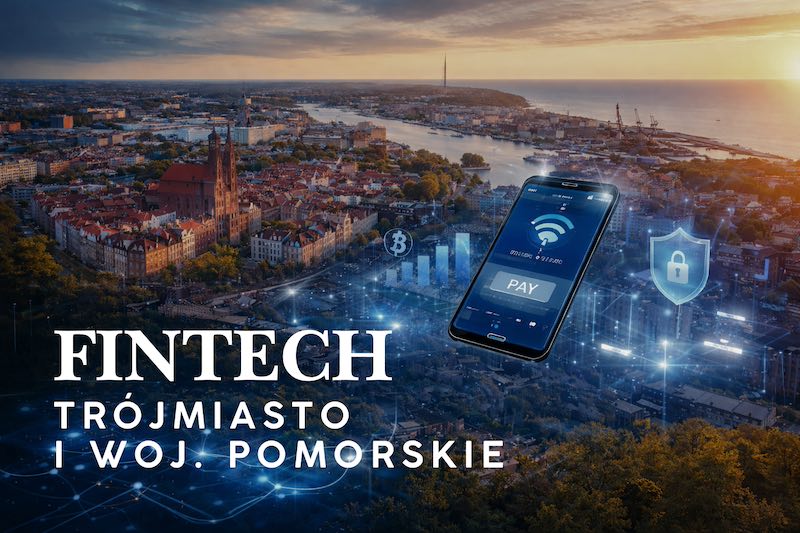
For years, when we said "Polish fintech," we meant Warsaw.
Capital, regulators, central banks, the largest fintech companies—everything was concentrated around one city. Meanwhile, in recent years, regional ecosystems have begun to grow faster than many expected.
One of the most interesting examples is Pomerania.
That is why a report mapping the Pomeranian fintech ecosystem was created—an attempt to organize a market that has ceased to be a local curiosity and has become a real, specialized technology hub.
For years, the Tri-City has been building a strong technological base. Software houses, product companies, IT expertise, academic resources. The natural consequence was to enter the fintech area—initially as a technology provider, later as a creator of its own products.
Today, various specializations can be seen in the region:
It is part of the national and European value chain.
The report is not promotional material. Nor is it a ranking.
This is an attempt to answer several key questions:
The conclusions are interesting.
The Pomeranian ecosystem is more diverse than it might seem. Alongside technology companies working for the financial sector, there are more and more entities building their own IP. Competences in the area of AI and financial process automation are also growing.
This means one thing: the region is building its own fintech identity.
In a broader context, the report reveals something even more significant.
Polish fintech begins operating in a multipolar model.
Warsaw remains the regulatory and financial center, but regional hubs such as Pomerania, Krakow, and Wrocław are developing their own competencies and specializations. This is a healthy direction.
For founders, this means:
For investors:
For companies implementing fintech:
The Pomeranian report is the first step.
If we want to have a serious discussion about the development of fintech in Poland, we need data, structure, and market mapping. Without these, it is difficult to talk about strategy, investments, or building partnerships.
Regional ecosystems will grow. The question is not "if," but "how quickly" and "in which specializations."
The report on Pomerania is the starting point for this conversation.
📊 The report can be downloaded here:
FinTech - Tricity and Pomerania
If, after reading this, you have any conclusions, arguments, or think that a particular segment is worth exploring in more depth, it is worth discussing. Regional fintechs will be one of the most interesting topics in the coming years.